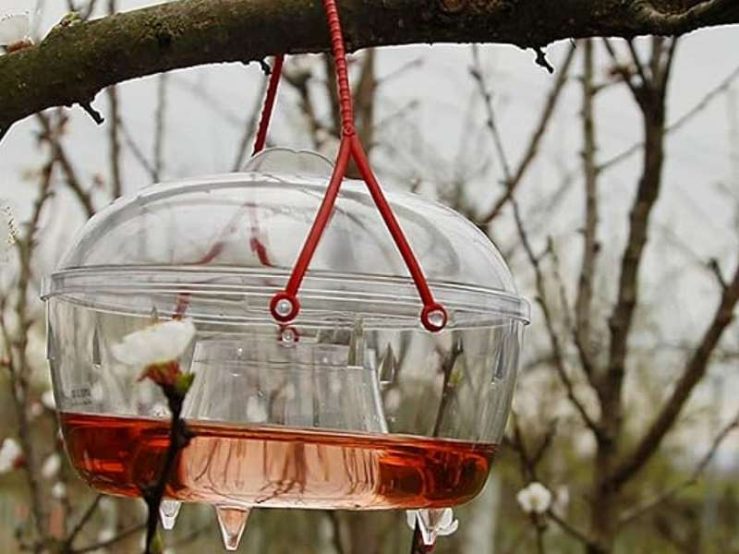
A wasp trap is more than simply a container filled with sticky syrup. The wasp bait is your go-to tool in fighting those buzzing party poopers that turn a beautiful afternoon into a mild panic attack situation. If you’ve ever found yourself swatting at air and wishing there was some magic out there to fix your problem, trust me when I say that wasp bait is about to become your new BFF. But before you go out and buy yourself a trap or create one out of your soda bottle collection, it’s time to look at some of the quirky facts about wasps and some tricks behind wasp traps that you never knew.
Table of Contents:
Wasps: The Little Devils of Nature
Wasps are the drama queens of the insect world. They just don’t show up uninvited. No, they prowl, mini warriors equipped with stingers and attitude for days. Unlike bees, wasps are not pollinators or earth saviours. What matters to them is catching insects and sustaining their colonies. That means that this summer, your barbecue, your garden party, or picnic may turn out to be one long drama-filled experience of negotiations to get through this motley crew of winged critics.
A wasp trap is particularly useful on terraces, balconies, in gardens, vineyards, orchards, etc., for protection against insect infestation.
Despite their notorious status, wasps are actually fairly interesting insects. The way they live in a sort of mini-empire, complete with queens, workers, and drones, each with their own distinct roles to play in the survival of their empire, is enough to fascinate anyone, but understanding their ways is clearly the first part of building an effective wasp trap, and the more you know your enemy, the less time you’ll spend running around in circles waving your napkin.
How Traps Capture Wasps
A wasp bait works because it cleverly exploits the insect’s behavioral habits. The insect is drawn by attractive substances such as sweet fluids and protein, as well as interested in the pheromones emanated by the population of the same kind. In this invention, the trapping techniques are integrated with a mechanism to trap the insect to prevent its escape, hence allowing you to enjoy your outdoor space without incessant interruptions.
There are two broad categories, namely commercial and homemade. Commercial ones may be extremely handy and even come equipped with bait and be designed in such a way that wasps cannot climb out. Homemade ones, however, can be unexpectedly effective. For instance, an altered soda bottle filled with sugar water or fruit juice will ensure dozens of wasps stay away from your lemonade. There’s something very gratifying about having the upper hand over nature, and the added benefit of the neighbour’s raised eyebrow of respect does not go amiss.
DIY Genius: Creating Your Own Wasp Trap
The only labour that goes into the home-made wasp bait is a bit of resourcefulness. Start with a transparent plastic bottle and remove the top third section with a knife. Turn it upside down and use it as a funnel to the rest of the bottle. Fill it with something that is a sweet liquid, like sugar water or even a bit of jam. Wasps go into the funnel to get the nectar, but can’t escape.
DIY Wasp Trap – What Works Best? If you don’t feel like dealing with DIY projects and want to rely on something that will definitely work, then visit the online store https://www.aroba.shop/.
To give you a particularly clever variation on this approach, you should place your trap well away from where you’re collecting. Wasps are territorial insects and curious, and they will find their way to your bait easily. Your guests can feast peacefully. Some people create elaborate wasp traps that consist of hanging them from tree branches and poles, and other decorations that look innocuous but are actually minuscule killers. Casual observation would appear to show that in partial shade but not in direct sun, more tentative wasps are captured, but if your trap is in the sun, you’ll catch your scout wasps.
Get Rid of Wasps without Chemicals
Still, however, even for a trap, prevention is key. It is even less likely for wasps to breach your territory if your environs are less welcoming. You must either cover any food and drinks if you are in the outdoors or not leave any trash outdoors. Nonetheless, wasps can prove to be quite diligent scavengers, so your bins must be closed. It is also a good idea that herbs such as mint, eucalyptus, or any other herb that wasps dislike are planted in the vicinity of where you are sitting, so it is even less likely for them to actually want to come nearer. You must also not wear anything too bright and wear a weak perfume so that it is less likely for you to resemble any of the flowers that wasps adore so much.
Catch wasps and other annoying insects easily and effectively – without chemicals, naturally, with a wasp trap.
Wasp Traps: A Science Project
In fact, in these cases with inquisitive children, wasp bait can easily turn into an amateur science laboratory project at hand. Note observations about which baits are most appealing to wasps, how quickly they fly into the bait, and maintain an informal journal with results. And voilà-summer afternoons turn into interactive schooling sessions about insect behaviour. Children learn hands-on biology, and parents regain their peace. The multi-purpose means an entertaining spinoff from what would have been an anxiety-ridden summer scenario anyway. It is also an inexhaustible wellspring of discussion points. Who would have thought an emptied bottle with sugar water would have led to an interesting insight into the concepts of attraction, the hunter-sought relationship, and problem-solving at once?
Placement: The Secret to Successful Wasp Traps
The most effective trap will fail if it is set up incorrectly. Wasps are surprisingly intelligent for so small a creature. They will avoid the areas of danger, human consumption of lemonade, say, but will not withstand a comparable temptation in a similar location. Set the trap a few feet away from the picnic area or the children’s playground. Areas catching the most sunlight are further prone to wasp attraction since the heat accelerates their metabolism, making them more agile. A trap located in a position that is most visible to wasps but least obtrusive to human observers achieves the optimal effect. It is a deception scenario.
Timing Is Everything
At this point, the matter of timing becomes more important than most would realize. The best traps are put down during the early summer months because new colonies begin to establish themselves. As summer progresses, traps will be needed to deal with colonies that have matured and turned aggressive.
By changing your strategy based on the season, you can avoid encounters, making the entire process seamless. When you understand the perfect time for dispensing a wasp bait, you are always a step ahead.
Last Minute Hacks & Safety Tips
Wasps require safety to be a priority. Wearing protective gloves whenever one is disposing of or handling the traps containing the wasps, even after death, will be a crucial aspect. Dispose of the insects by disposing of the traps after sealing them by throwing them into the trash can, if possible. It will also be important to monitor the traps from time to time to ensure that the bait’s efficiency has not degraded. Spoiled or vapor baits will decrease efficiency; all that counts is maintenance. Excessive efforts, such as spraying near a crowd, will not be appropriate since a wasp bait will accomplish the task by staying put.
A wasp trap features a large, funnel-shaped entrance hole for optimal trapping capabilities. Once inside, wasps, hornets, and other insects cannot escape.
Wasps require safety to be a priority. Wearing protective gloves whenever one was disposing of or handling the traps containing the wasps, even after death, will be a crucial aspect. Dispose of the insects by disposing of the traps after sealing them by throwing them into the trash can, if possible. It will also be important to monitor the traps from time to time to ensure that the bait’s efficiency has not degraded.
Wrapping It Up
At the end of it all, it is the common wasp trap that becomes your unsung hero in the battle against buzzing creatures. With some knowledge, placement, and creativity, you will enjoy your backyard for picnic activities, playing games with your loved ones, and having cool beverages in the afternoon. Enjoy the genius in designing a trap, enjoy the wonders of nature without becoming part of it unknowingly, and allow it to do the work while you enjoy your lemonade. With an effective wasp trap, mankind can live in harmony with nature while having control over summer adventures.